Fuel is one of the largest ongoing expenses for any trucking operation. Whether you’re an owner-operator or managing a growing fleet, keeping fuel costs under control while maintaining steady cash flow is a constant balancing act. With diesel prices fluctuating and operating expenses rising, many carriers are turning to tools designed specifically for the trucking industry.
One of the most widely used solutions is a fuel card for trucking companies. These specialized payment cards help fleets manage fuel purchases, track driver spending, and improve operational efficiency on the road.
But how exactly does a fuel card work, and why do so many trucking businesses rely on them? Understanding how these cards function and how they pair with financial tools like freight factoring services can help trucking companies manage costs and maintain stronger cash flow.
What is a Fuel Card for Trucking Companies?
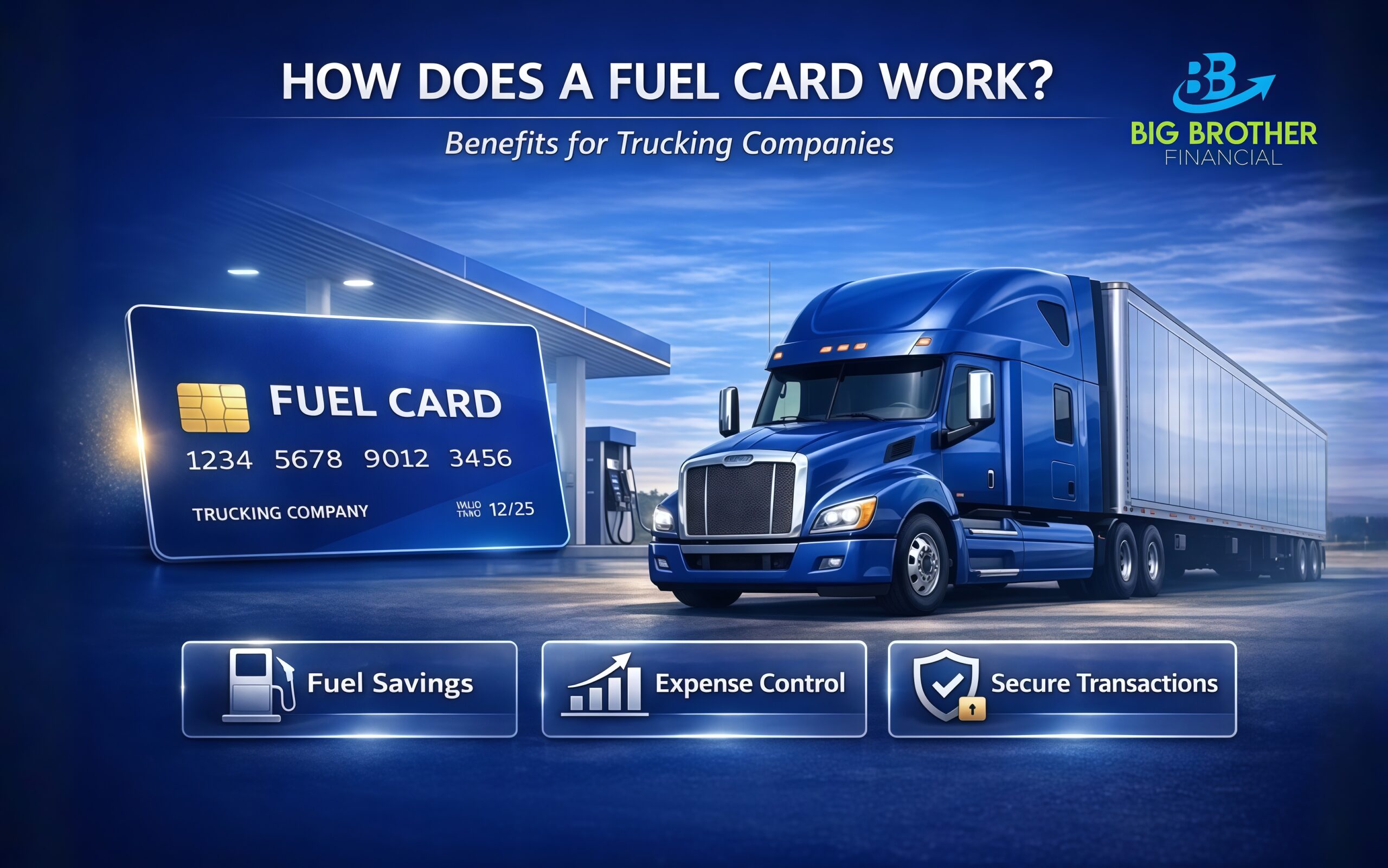
A fuel card, often referred to as a fleet fuel card, is a payment card designed specifically for commercial transportation businesses. While it functions similarly to a credit or charge card, it includes additional features tailored to trucking operations.
Fuel cards allow drivers to purchase diesel at participating truck stops while giving fleet managers visibility into every transaction. This makes it easier for companies to track expenses, monitor driver activity, and access fuel discounts across large truck stop networks.
Typical features of a trucking fuel card include the following:
- Fuel discounts at major truck stops
- Real-time purchase tracking
- Driver identification and security controls
- Spending limits and purchase restrictions
- Detailed reporting for fuel usage
For many carriers, fuel cards are not just a payment method; they serve as a complete fuel management system for the business.
How Fuel Cards Work
Fuel cards are designed to simplify the fueling process for drivers while giving companies more control over expenses. Although each provider operates slightly differently, the process generally follows a similar structure.
1. The Company Issues Fuel Cards to Drivers
Trucking companies assign a fuel card to each driver or truck in their fleet. Each card is typically linked to a specific vehicle, driver, or account within the company.
Security measures often include:
- Driver identification numbers
- PIN verification
- Truck or unit numbers
- Odometer entry requirements
These controls help ensure the card is used only for authorized purchases.
2. Drivers Use the Card at Participating Truck Stops
When a driver arrives at a truck stop that accepts the card, they insert it at the pump or inside at the fuel desk and enter the required verification information.
Depending on the system, drivers may need to provide:
- Driver ID or PIN
- Truck number
- Odometer reading
- Trip information
Once the information is verified, the transaction is approved through the fuel card network.
3. Transactions Are Logged Automatically
After the fuel purchase is completed, the system records the details instantly. Fleet managers can view transaction data in real time through an online dashboard or reporting platform.
These records typically include:
- Location of the fuel purchase
- Number of gallons purchased
- Price per gallon
- Date and time of the transaction
This level of transparency helps companies keep a close eye on fuel spending across their fleet.
4. The Company Pays the Fuel Card Provider
Depending on the provider and agreement, trucking companies may settle fuel purchases weekly, biweekly, or monthly. Some cards function like revolving credit accounts, while others operate with prepaid balances.
Because fuel spending is consolidated into one account, accounting teams spend less time collecting receipts and processing individual expenses.
Key Benefits of Fuel Cards for Trucking Companies
1. Fuel Discounts Across Truck Stop Networks
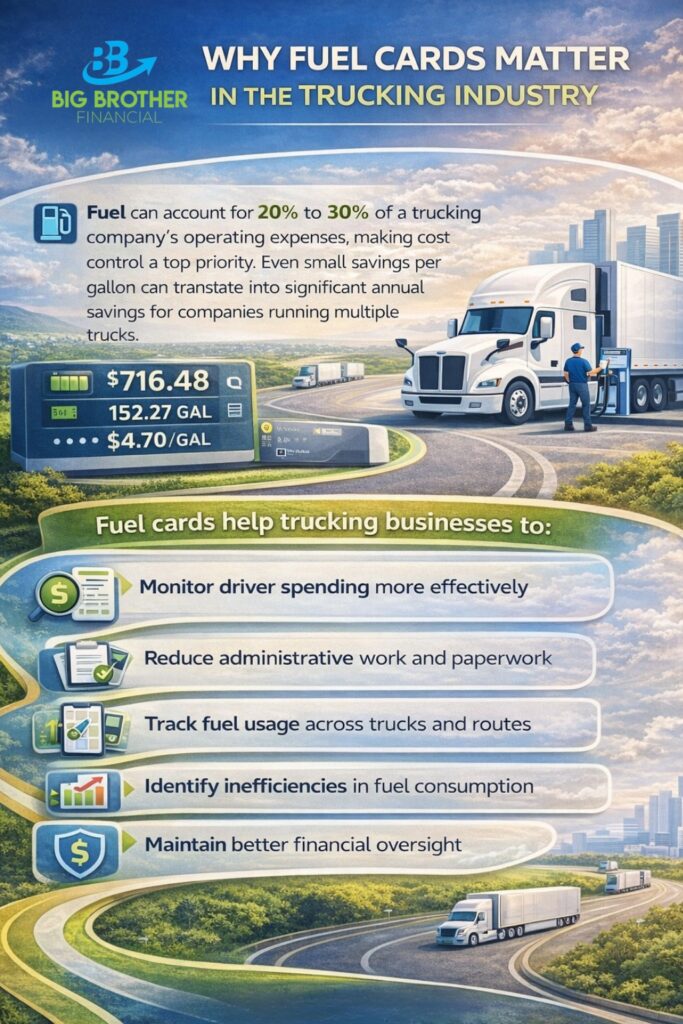
Many fleet fuel card programs provide negotiated diesel discounts at major truck stops across the country. While the savings per gallon may appear small, they quickly add up for trucks that refuel several times per week.
2. Better Expense Tracking
Fuel cards automatically generate detailed reports for every transaction, allowing companies to monitor fuel spending by driver, vehicle, or location.
3. Spending Controls for Drivers
Fleet managers can customize spending limits and restrictions on each card, helping reduce misuse and protect company finances.
4. Improved Fraud Protection
Fuel card providers often include fraud detection systems that flag unusual activity and notify companies of suspicious transactions.
5. Simplified Accounting and Reporting
Instead of managing dozens of fuel receipts, companies receive consolidated reports summarizing all fuel activity, simplifying budgeting and operational analysis.
The Cash Flow Challenge in Trucking
While fuel cards help manage fuel spending, they do not solve another major challenge trucking companies face: delayed freight payments.
Many brokers and shippers operate on 30 to 60-day payment terms, meaning trucking companies often wait weeks to receive payment for completed loads. Meanwhile, expenses like fuel, insurance, payroll, and maintenance must be paid immediately.
How Freight Factoring Supports Fuel Expenses
Freight factoring allows trucking companies to convert unpaid freight invoices into immediate working capital. Instead of waiting weeks for payment, carriers can receive the majority of the invoice value within 24 hours.
This fast access to cash helps trucking businesses cover essential costs such as fuel, repairs, payroll, and other operating expenses. Many carriers rely on freight factoring services to maintain consistent cash flow and avoid financial gaps between loads.
Why Many Carriers Use Fuel Cards and Factoring Together
Fuel cards help control spending, while freight factoring improves cash flow. Together, they provide a financial structure that allows trucking companies to operate more efficiently.
This combination helps carriers:
- Avoid cash shortages between loads
- Keep trucks fueled and moving
- Accept more freight opportunities
- Maintain stable operations during growth
How Big Brother Financial Helps Trucking Companies Stay Moving
At Big Brother Financial, we work with carriers across the country to provide dependable freight factoring services for trucking companies. Our solutions are designed to help trucking businesses maintain consistent cash flow while waiting for brokers and shippers to pay. If you’re looking to improve your cash flow or have questions about getting started, you can easily contact our team for guidance.
By turning freight invoices into immediate capital, carriers can cover fuel expenses, keep their trucks running, and focus on growing their operations.
Final Thoughts
Fuel cards have become an essential tool for modern trucking operations. They simplify fuel purchases, improve spending visibility, and help companies manage one of their largest operating costs.
When combined with strong cash flow solutions like freight factoring, trucking businesses gain the financial stability needed to keep trucks on the road and operations running smoothly.
For carriers looking to reduce payment delays and maintain steady working capital, Big Brother Financial provides the support needed to keep your business moving forward.